Why Great Lakes Shipwrecks Are So Well Preserved
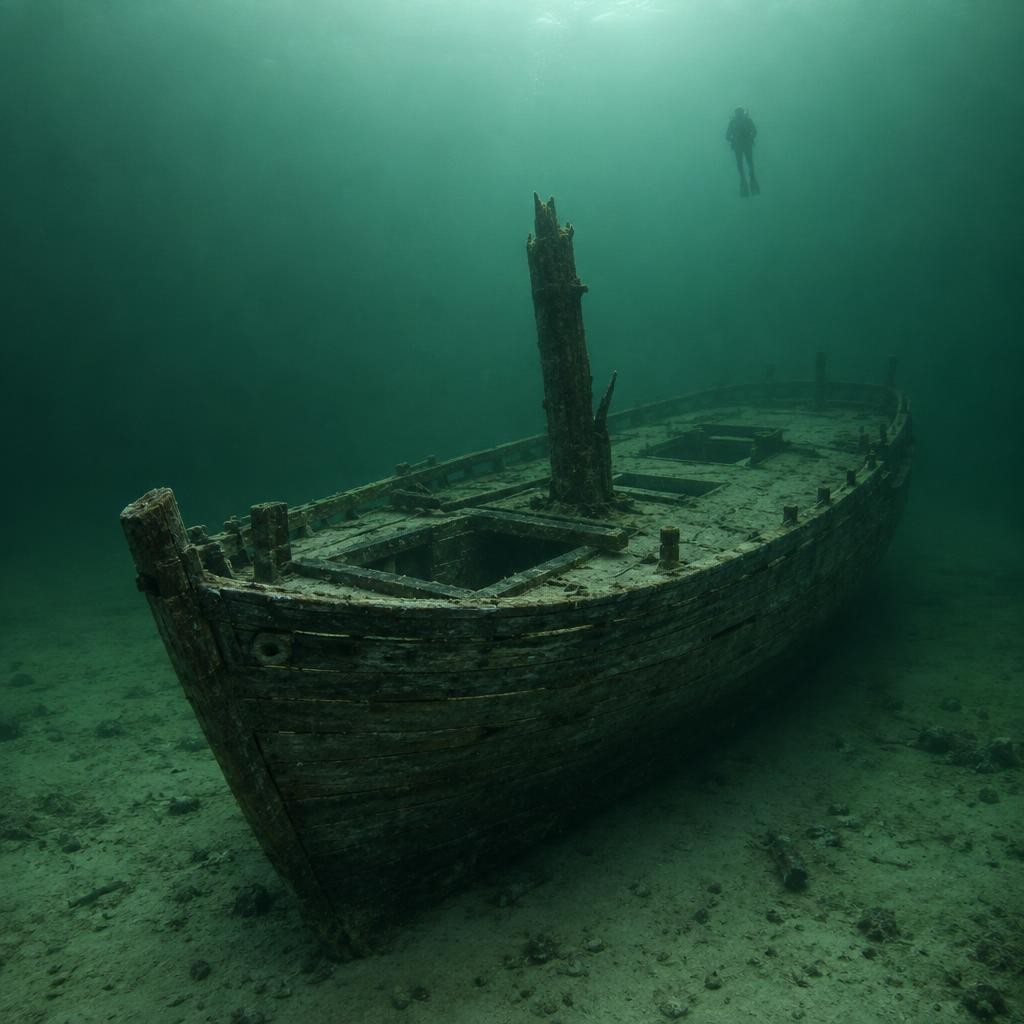
Drop down a descent line in the Great Lakes and you may find a wooden schooner sitting on the bottom more than a century after it sank. Its hull planks are still in place and its deck fittings are right where the crew left them. Divers who know ocean wrecks often surface shaking their heads. How does wood survive that long underwater? The short answer is cold, fresh water and no shipworms. Here is the longer version for this edition of Third Coast Classroom.
Cold Water Slows Everything Down
Decay is chemistry and biology, and both slow down in the cold. The deep water of the Great Lakes stays cold all year, close to 39°F (4°C). Fresh water is at its densest near that temperature, so the coldest dense water settles to the bottom of a deep lake and stays there. Below the thermocline, a wreck is essentially sitting in a dark refrigerator.
In that cold, the bacteria and fungi that break down wood work very slowly. Corrosion of iron fittings and fasteners slows down too. Shallow wrecks are a different story. They warm up in summer, get more sunlight, and grow more algae and other life, so they usually show their age more.
Fresh Water Means No Shipworms
This is the big one. Despite the name, shipworms are not worms. They are wood-boring clams that live in salt water. In the ocean they tunnel through exposed timber, and over time they can riddle a wooden hull until little of it is left.
Shipworms cannot survive in fresh water, so Great Lakes wrecks have never faced them. A wooden ship that might be badly damaged in the ocean can stay structurally recognizable here for generations.
Fresh water also carries far less dissolved salt than seawater. That makes it less aggressive toward iron and steel, so metal on freshwater wrecks generally corrodes more slowly than it would in the sea.
Depth, Darkness, and Calm
Great Lakes storms are legendary, but their wave energy fades with depth. A wreck lying deep enough sits below most of that churn. Less light at depth also means less plant growth on the structure.
Shallow wrecks take the beating instead. Waves, shifting sand, and winter ice can break them apart, which is why many shallow sites are scattered debris fields rather than intact hulls.
Not Frozen in Time
Preservation does not mean permanence. Invasive zebra and quagga mussels have colonized many Great Lakes wrecks. They coat surfaces, hide details divers once could see, and add weight to the structure. Researchers are still studying how they affect wood and metal over the long term.
People are a threat too. Anchors dropped into a wreck, careless fins, and souvenir hunting can undo in minutes what the lake protected for a century.
Practical Takeaways: Help Keep Them This Way
Look, photograph, and leave it. Michigan law protects shipwrecks and artifacts on Great Lakes bottomlands. Leave everything where it lies.
Use mooring buoys where they exist instead of anchoring into or near a wreck.
Dial in your buoyancy and trim. Keep your fins off fragile wood, and avoid kicking up silt that buries details and ruins visibility for everyone behind you.
Stay outside unless you are trained to go in. Wreck penetration is an overhead environment. It requires specific training, a continuous guideline, and stricter gas rules.
Dive within the limits of your certification and experience. Many of the best-preserved wrecks are deep, cold, and dark. Get the training and drysuit experience first, and the wrecks will still be there.
Clean, drain, and dry your gear between lakes and inland sites to help slow the spread of invasive species.
The Great Lakes are one of the best places in the world to see what a working ship really looked like. That is because of cold, fresh water and a lot of luck. Our job as divers is to visit them and leave them as we found them. Dive smart. Get back. Look good.


Comments