Cold Water Wisdom: Dressing for the Great Lakes
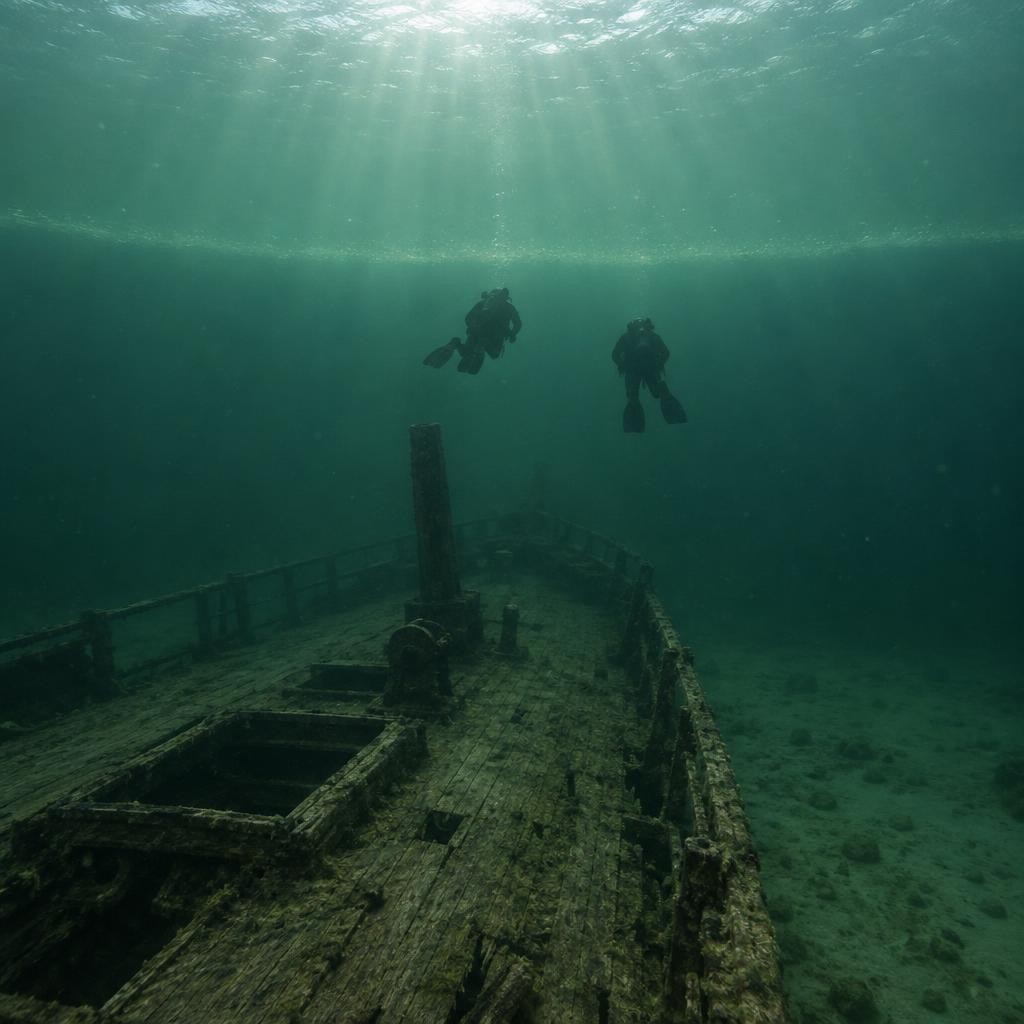
Great Lakes divers learn quickly that the water sets the rules. Even on a hot July afternoon, the wreck below the thermocline can be startlingly cold, and our lakes stay cold for much of the year. Here, exposure protection is not a comfort upgrade. It is part of diving smart.
This post is educational, not medical advice. For questions about cold stress, hypothermia, or how cold affects your own health and diving, talk with a physician or Divers Alert Network (DAN) at diversalertnetwork.org.
Why Cold Water Matters
Water pulls heat away from your body much faster than air at the same temperature. That is why 60-degree air feels pleasant but 60-degree water feels very different after a few minutes.
Being cold also makes the dive harder. Cold hands are clumsy hands, and a chilled diver tends to pay less attention to the things that matter most: depth, gas, and buddy. Good thermal protection lets you stay focused on the dive instead of on your fingers.
In summer, many Great Lakes sites have a thermocline. The water above it can feel comfortable, while the water below can be much colder. Dress for the coldest water you plan to reach, not the water at the swim ladder.
Wetsuit or Drysuit?
Wetsuits trap a thin layer of water against your skin that your body warms. Fit matters a lot. A loose suit lets cold water flush through and steals that warmth. Neoprene also compresses as you descend, so a wetsuit insulates less and provides less buoyancy at depth than it does at the surface.
Drysuits keep you dry. The suit itself is a shell; most of your warmth comes from the undergarments you wear inside it, so you can layer up or down for the season. That flexibility is why so many Michigan divers dive dry for most or all of the year.
Drysuit diving requires training. Buoyancy is managed with the suit and the BC as taught in your course. Agencies differ on whether the suit or the BC is the primary buoyancy device, so manage your buoyancy the way you were trained. Drysuit certification is also a common prerequisite for ice diving, which requires its own specific training and a full team. It is never something to try casually.
Head, Hands, and Feet
A great suit will not help much if your head and hands are losing heat. A hood, gloves or dry gloves, and boots or warm socks under your drysuit boots round out the system.
Thicker gloves trade warmth for dexterity. Before you take new gloves to a wreck, practice in a pool or shallow, calm water. Make sure you can work your inflator, handle your weights, use your cutting tool, and give clear hand signals with them on.
More Protection Means New Weighting
Every change to your exposure protection changes your buoyancy. A thicker wetsuit, a new undergarment, a switch from wet to dry, or a different cylinder all mean it is time for a new weight check.
Do the check at the end of a dive with about 500 psi (35 bar) in an aluminum cylinder and the BC empty. With a normal breath you should float at eye level, and on exhale you should sink slowly. A related check: you should be able to hover at about 15 ft (4.5 m) with 500 psi and no gas in the BC. If you dive dry, follow the method your drysuit instructor taught.
Never do your weight check with a full tank. An aluminum 80 holds roughly 5 to 6 lb of gas, so a full-tank check leaves you light on your safety stop. And remember that aluminum cylinders become positively buoyant as they empty while steel cylinders stay negative, so your weighting has to match your cylinder.
Practical Takeaways
Plan your protection for the coldest water on the dive, below the thermocline, not at the surface.
Dive the exposure protection you are trained and practiced in.
Test your gloves and hood in easy conditions before a demanding dive.
Redo your weight check after any change to suit, undergarments, or cylinder, and write the result in your log.
Pack a warm layer and wind protection for the boat or the beach between dives.
Getting cold is a valid reason to call a dive. Signal your buddy and head up together, ascending at 30 ft per minute or slower and making your 3 to 5 minute safety stop at about 15 ft.
For questions about cold stress and your health, start with DAN or your physician.
Cold water is part of what makes Great Lakes diving special. Dress for it, train for it, and enjoy it. Dive smart. Get back. Look good.


Comments