Sidemount Diving: What It Is and Why Divers Choose It
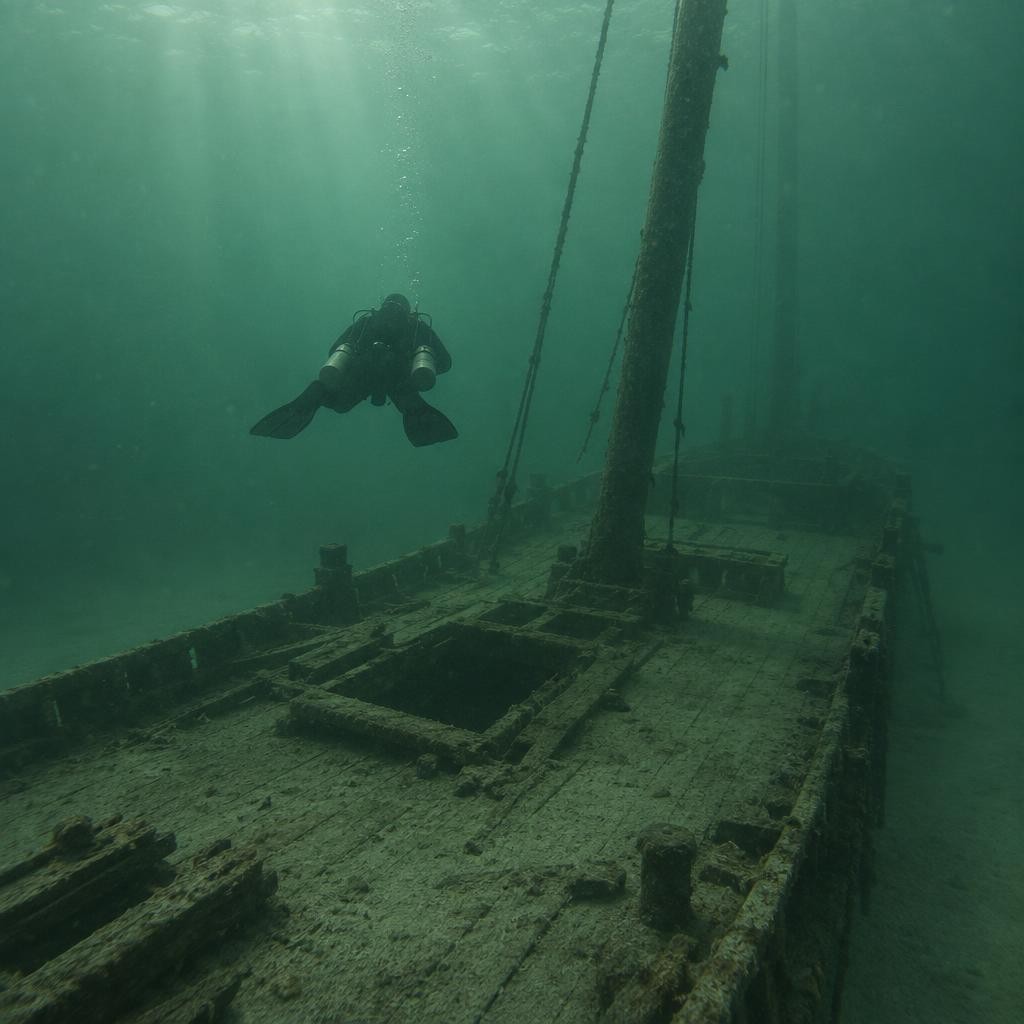
Every so often you'll see a diver hovering over a Great Lakes wreck with a cylinder tucked along each side, a bit like saddlebags, and nothing on their back. That's sidemount. If you've spotted it at the quarry or on a charter and wondered why anyone would rearrange their whole rig, this post is for you.
One quick note before we start. This post explains what sidemount is and why people use it. It isn't a how-to. If you want to learn it, find an instructor who teaches sidemount, and if you're headed toward the technical side, expect technical training on top of that.
What sidemount actually is
In a standard recreational setup, your cylinder rides on your back, strapped to your BC. In sidemount, the cylinders hang along your sides, roughly under your arms and running parallel to your body. They clip to a harness built for the job, and each cylinder has its own regulator.
Most sidemount divers carry two cylinders, which gives them two independent gas supplies instead of one. Some divers start out with a single cylinder in a sidemount harness to learn the basics, though not every program does it that way. Your instructor will talk you through which approach fits your training and your goals.
The style grew up in cave diving, where explorers needed to fit through passages too tight for a tank on the back. Over time, divers figured out it had plenty to offer in open water too.
Why divers choose it
Trim. With the cylinders lined up along your body, it's easier to get into a flat, streamlined position. Less drag means less effort, and a stable horizontal profile makes it easier to hold still above the bottom. On a lot of Great Lakes wrecks, the bottom is fine silt, and one sloppy fin kick can wipe out the visibility for everyone. Good trim is how you avoid being that diver.
Valve access. On a back-mounted cylinder, the valve sits behind your head where you can't see it. In sidemount, the valves are out in front of you, where you can see them and reach them. That's handy if something needs your attention. Valves come in two styles, yoke (also called A-clamp or INT) and DIN, and your instructor will help you sort out what works for your rig.
Redundancy. Two cylinders, each with its own regulator, means you're carrying two separate gas supplies. The trade-off is that you now have two supplies to manage, and that's a skill your training will build and drill. More gas on board is never a reason to stretch your plan.
Easier on the body. Instead of hauling one heavy rig, you can carry cylinders one at a time and clip them on near or in the water. If you've ever wobbled down a rocky Michigan shore entry in a drysuit with a tank on your back, you can see the appeal. If back or shoulder problems are part of why you're curious, start with your physician and DAN (dan.org) before you sign up for anything.
Travel. A sidemount harness packs smaller than a set of manifolded doubles, and you can often use single cylinders at your destination. Check with the operator ahead of time, since not every shop is set up for sidemount divers.
Caves, wrecks, and cold water
Sidemount's low profile is a big reason cave and wreck divers like it. But going inside a wreck, into a cave, or under ice is an overhead environment. That takes its own specific training, a continuous guideline, and stricter gas rules. A sidemount card on its own doesn't qualify anyone to go inside anything.
Cylinder type matters too. Aluminum cylinders become positively buoyant as they empty, while steel cylinders stay negative. Your weighting has to account for that, and in sidemount it's something your instructor will work through with you.
Around here, sidemount usually means drysuit diving as well. Drysuit diving requires its own training, and you'll manage buoyancy with your suit and BC as you were trained. Stacking a new configuration on top of a drysuit you're still getting used to is a lot at once.
What to have under your belt first
Prerequisites for sidemount courses vary by agency, so check with your instructor. Beyond the card requirements, two things will make your course go a lot better:
Solid buoyancy control, including holding a steady position without sculling with your hands, and comfort in a drysuit if you'll be diving the Great Lakes.
Enough dives that the basics feel automatic, so your attention can go to the new stuff.
And once you're trained, keep these in mind:
Sidemount is a gear configuration, not a depth upgrade. Dive within the limits of your certification and experience.
Gas planning still follows your training, whatever the configuration.
Overhead environments need overhead training. No exceptions.
If sidemount has caught your eye, talk to an instructor who teaches it and ask to watch a session. Seeing a well-trimmed sidemount diver in the water explains it better than any article can.
Dive smart. Get back. Look good.


Comments